
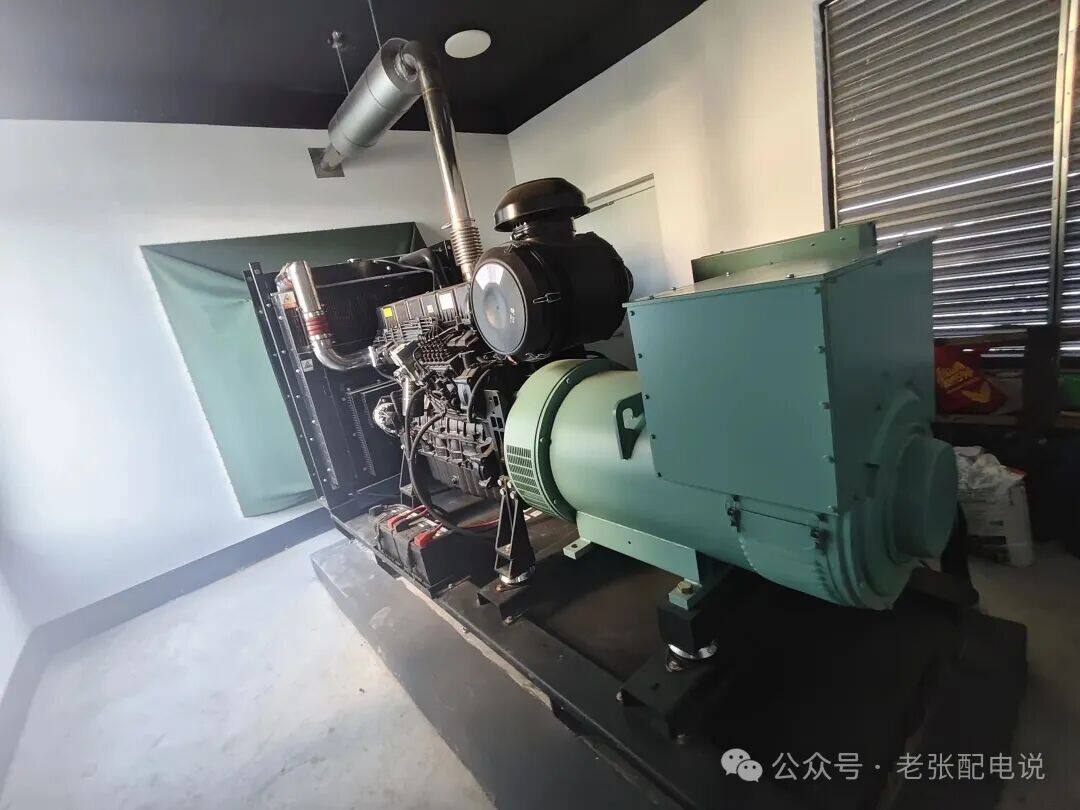
Modern diesel generator sets fall into low‑voltage units (400 V) and high‑voltage units (6 kV / 10 kV)
Modern diesel generator sets fall into low‑voltage units (400 V) and high‑voltage units (6 kV / 10 kV). Beyond output voltage, they differ fundamentally in output current, line loss, single‑unit capacity, earthing system, paralleling capability, transmission distance, construction cost and compatible loads.
Low‑voltage 400 V units are widely adopted for ordinary small‑to‑medium‑size computer rooms, commercial premises and construction sites. High‑voltage units are mandatory for large data centres, industrial parks, plant‑wide central power supply and long‑distance power distribution. Combining power distribution principles and field engineering practice, this article provides systematic comparison, in‑depth analysis and clear criteria for model selection.
I. Definition of Basic Parameters
1. Low‑Voltage Generator Sets (Standard Civil / Computer‑Room Type)
‑ Output voltage: 400 V / 380 V, three‑phase five‑wire ‑ Single‑unit capacity range: 50 kVA ~ 2500 kVA ‑ Output current: high‑current output ‑ Power distribution: direct low‑voltage outgoing cables; no transformer required
2. High‑Voltage Generator Sets (Industrial / Large Power‑Station Type)
‑ Output voltage: 6 kV, 10 kV (10 kV is the mainstream) ‑ Single‑unit capacity range: 2000 kVA up to 5000 kVA and above ‑ Output current: low‑current output ‑ Power distribution: high‑voltage outgoing cables → high‑voltage switchgear → step‑down transformer to 400 V for load feeding
II. In‑depth Analysis of Eight Core Differences
1. Output Current and Line Loss (Most Critical Difference)
Power formula: \(S=\sqrt{3}UI\) For a given power rating: the higher the voltage, the lower the current.
Low‑voltage units Low voltage brings extremely high current, resulting in severe cable heating and substantial line loss. Obvious voltage drop occurs over distances greater than 100 m. Heavier‑gauge cables become necessary, driving sharp increases in cabling costs.
High‑voltage units When voltage rises by 25 times (10 kV ÷ 0.4 kV), current is reduced by a factor of 25. Line loss is minimal with almost no voltage drop. Stable power transmission can be achieved over hundreds of metres, giving high‑voltage units decisive advantages for long‑distance power supply.
Engineering conclusion: Choose low‑voltage for short‑distance power consumption; choose high‑voltage for long‑distance supply across large‑scale parks.
2. Single‑Unit Capacity and Load‑bearing Capacity
‑ Low‑voltage units have a low upper limit: maximum single‑unit capacity is 2500 kVA. Higher capacities would exceed the carrying limits of cables, switches and circuit breakers, making manufacture and cabling impracticable. ‑ High‑voltage units support very large single‑unit capacities, ideal for large data centres, park‑wide emergency power and plant‑wide standby power supplies.
3. Differences in Earthing Systems
Low‑voltage 400 V units Adopt TN‑S low‑voltage earthing system with directly‑earthed neutral point. Neutral and protective earth conductors are available for direct powering of UPS, air‑conditioners, IT equipment and general mechanical‑electrical loads.
High‑voltage 10 kV units Belong to low‑current earthing systems; the neutral point is either unearthed or earthed via arc‑suppression coils or resistors. No neutral conductor output. They cannot directly supply low‑voltage equipment. High‑voltage switchgears and dry‑type step‑down transformers are required before power can be fed to computer‑room and other end‑user equipment.
4. Paralleling and Expansion Capability
‑ Low‑voltage units: total paralleled capacity is limited. A large number of paralleled units are prone to circulating current, voltage imbalance and oscillation. ‑ High‑voltage units: support centralised paralleling of multiple large‑capacity units for building large self‑owned power stations, delivering far superior stability and synchronisation performance compared with low‑voltage systems.
5. Equipment Structure and Protection Class
‑ Low‑voltage units feature simple structure, easy maintenance and generic spare parts; they can be serviced by qualified general electricians. ‑ High‑voltage units are high‑voltage electrical equipment with high insulation grade and strict voltage‑withstand requirements. Their construction is sophisticated. Only certified high‑voltage electricians may perform operations. Annual voltage‑withstand tests and insulation inspections are compulsory.
6. Capital and Construction Costs
Low‑voltage units ‑ Lower equipment cost, simple control cabinets; no high‑voltage switchgear or transformers needed. ‑ Fast construction, low civil‑engineering requirements and very low subsequent maintenance expenses. ‑ Advantage: best cost‑performance for small‑capacity, short‑distance applications.
High‑voltage units ‑ Higher equipment cost; auxiliary hardware including high‑voltage switchgears, high‑voltage cables, transformers and high‑voltage protection devices are mandatory. ‑ Stringent requirements apply to civil works, fire protection, insulation and clearance distances, leading to high initial investment. ‑ Advantage: lower overall costs for large‑capacity, long‑distance and multi‑unit paralleling scenarios.
7. Compatible Load Types
Low‑voltage units are suitable for: Standard computer‑room loads: UPS, precision air‑conditioners, servers, lighting, water pumps, fire‑protection systems and general‑purpose motors.
High‑voltage units are suitable for: Plant‑wide high‑voltage equipment, large air compressors, high‑voltage motors and main incoming supply for entire parks. They cannot directly feed IT loads; power must be stepped down first.
8. Fault and Protection Characteristics
‑ Low‑voltage faults: high short‑circuit current, sensitive tripping, clear fault symptoms and easy troubleshooting. ‑ High‑voltage faults: enormous short‑circuit energy and strong destructive potential. Protection schemes include differential protection, over‑/under‑voltage protection, zero‑sequence protection and insulation monitoring, forming more complex and rigorous protection systems.
III. Definite Selection Criteria
✅ Scenarios requiring low‑voltage generator sets
Total single‑unit load within 2500 kVA
Cable run from generator room to load terminals within 100 metres
Ordinary computer rooms, buildings, shopping malls, residential compounds and small factories
Direct power supply for UPS, precision air‑conditioners and weak‑current IT equipment
✅ Scenarios requiring high‑voltage generator sets
Very large total load exceeding 2500 kVA per circuit
Centralised generator‑room layout, long transmission distances and large park coverage
Multi‑unit paralleling serving as main or standby power for factories and industrial parks
Large data centres, heavy‑industrial plants and self‑owned power stations
IV. Key Operation & Maintenance Guidelines for Generator Rooms
Computer rooms equipped with conventional UPS and precision air‑conditioners should adopt 400 V low‑voltage units exclusively. Specifying high‑voltage units represents over‑specification and unnecessary expenditure.
High‑voltage units cannot connect directly to UPS. Power must pass through 10 kV/0.4 kV step‑down transformers before feeding ATS and low‑voltage distribution systems.
For equal power ratings, high‑voltage installations require far fewer cables with smaller cross‑sections, yielding cost savings for large‑scale projects.
Drawbacks of low‑voltage units: high operating current, tendency to overheat and significant voltage drop over long distances. Drawbacks of high‑voltage units: high initial investment and higher expertise threshold for maintenance.
Conclusion
The essential difference between high‑voltage and low‑voltage generator sets lies in two distinct power‑distribution philosophies: low‑voltage high‑current transmission versus high‑voltage low‑current transmission.
Low‑voltage units deliver the most economical and practical solution for small‑load, short‑distance and ordinary computer‑room applications. High‑voltage units provide stability and efficiency for very‑large‑load, long‑distance and centralised paralleling power stations. Avoid blindly specifying high‑voltage hardware; likewise, do not rely solely on paralleled low‑voltage units to handle heavy loads. Always select equipment according to capacity, transmission distance and load characteristics.