
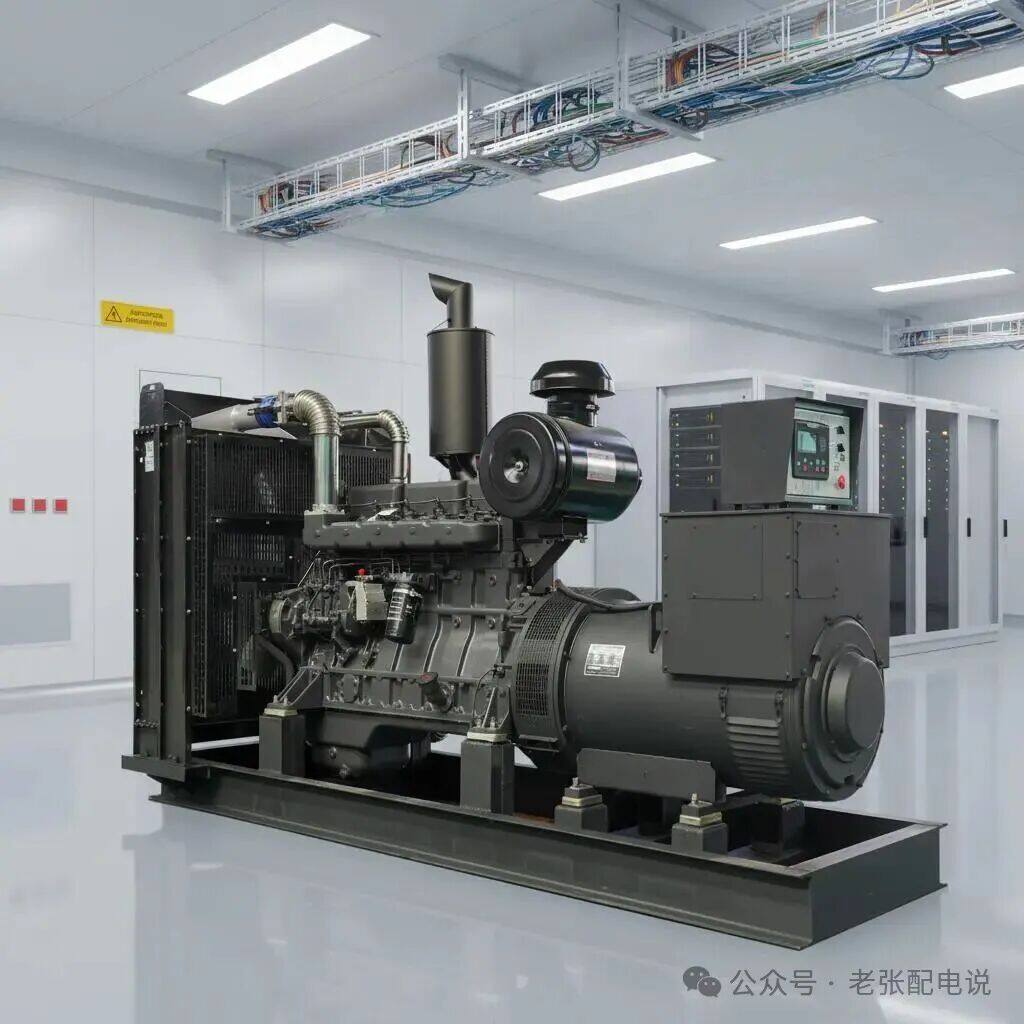
As core emergency standby power sources for data centres, power distribution rooms, factories and hospitals, diesel generator sets must be put into service immediately upon mains power failure.
Common Fault Causes and Solutions for Diesel Generator Sets
As core emergency standby power sources for data centres, power distribution rooms, factories and hospitals, diesel generator sets must be put into service immediately upon mains power failure. Remaining in standby mode for long periods, units are prone to various faults such as depleted batteries, air ingress into fuel circuits, blocked filter elements, abnormal voltage and high‑temperature alarms. If the unit fails to start or operates with defects during an unexpected power outage, it will directly result in equipment power‑off and service disruption, leading to serious operation‑and‑maintenance incidents. Based on routine computer‑room O&M experience, this article systematically sorts out five categories of high‑incidence faults, root causes, troubleshooting procedures and standard solutions, providing a complete reference for routine inspection, fault handling and preventive maintenance.
I. Failure to Start or Difficult Starting
This is the most frequent fault of generator sets, manifested in three conditions: starter motor does not rotate, starter spins without engine ignition, and weak cranking.
Main Causes
Battery failure: long‑term float‑charging leads to battery ageing, terminal oxidation and insufficient voltage, resulting in inadequate starting current that cannot crank the engine.
Abnormal fuel system: empty fuel tank, kinked fuel pipes, clogged fuel filter elements and air ingress into fuel circuits cause interrupted fuel supply.
Poor air intake: severely blocked air filter leads to insufficient cylinder air intake and failed ignition.
Low‑temperature environment, improper diesel grade and poor atomisation of fuel injectors.
Solutions
Check daily to maintain static voltage above 13.5 V per single battery; clean oxidized terminals and apply grease for rust prevention. Verify fuel valves are open and fuel pipes are free of deformation and leakage. After long‑term shutdown, manually prime the fuel pump and bleed air from fuel circuits before restarting. Replace blocked fuel and air filter elements. In winter, use suitable low‑temperature‑grade diesel to prevent wax‑induced blockage. For faulty injectors, disassemble and calibrate injection pressure or replace them directly.
II. Low‑oil‑pressure Alarm and Insufficient Operating Oil Pressure
Fault Causes
Insufficient oil level, degraded engine oil with non‑compliant viscosity; blocked oil filter creates high circuit resistance and insufficient oil supply; worn oil pump and clogged oil‑suction strainer; pipeline leakage and pressure relief cause persistently low operating oil pressure and trigger protective shutdown of the unit.
Solutions
Stop the unit and let it stand still before checking oil level; top up with engine oil of the same specification if insufficient. When service life is reached or oil turns black and thin, replace engine oil and oil filter as a complete set. Clean the oil‑suction strainer of the oil pump and check for oil leakage points on engine circuits. Calibrate or replace faulty oil‑pressure sensors to keep operating oil pressure within the standard range. Never force the unit to carry load under abnormal oil pressure, to avoid cylinder scuffing, bearing seizure and permanent engine damage.
III. High‑water‑temperature Condition, High‑temperature Alarm and Boiling‑over Shutdown
Fault Causes
Insufficient antifreeze and lost anti‑corrosion performance due to overdue replacement; radiator fins clogged by catkins and dust resulting in poor heat dissipation; aged and blocked cooling hoses and stuck thermostat; loose and slipping cooling belt leading to insufficient fan speed; poor ventilation and excessive ambient temperature inside the generator room.
Solutions
Replenish or replace antifreeze regularly; long‑term use of tap water is prohibited. Blow and clean dust and debris on the external surface of the radiator with compressed air. Inspect cooling hoses for ageing and bulging; fasten hose clamps securely. Adjust belt tension and replace damaged belts in time. Check thermostat operation and replace stuck thermostats. Improve generator‑room ventilation to avoid high‑temperature operation in confined spaces and prevent over‑loaded high‑temperature conditions.
IV. Abnormal Generator Output Voltage: No‑voltage or Unstable Voltage
Fault Causes
Long‑term idle storage causes residual magnetism loss so the unit cannot build up initial voltage; damaged AVR voltage‑regulating module or incorrect parameter settings; loose output terminals with poor contact and overheating; unbalanced loads and instantaneous overload; loose and poorly‑contacted excitation wiring.
Solutions
Restore magnetism via professional magnetisation treatment for demagnetised units. Recalibrate AVR voltage parameters and replace defective modules. Fasten output cable terminals and remove oxidation and burn marks. Prohibit overload operation and maintain three‑phase load balance. Inspect excitation‑loop wiring and repair loose or damaged cables to stabilise output voltage within the standard 380/400 V range.
V. Abnormal Exhaust Smoke (Black, White and Blue Smoke)
Causes and Remedies
Black smoke: insufficient air intake, blocked air filter, excessive fuel injection and incomplete combustion.
Solution: replace air filter, clean air intake pipelines and calibrate fuel injectors.
White smoke: water‑contaminated fuel, minor water seepage through cylinder‑head gasket and water‑vapour condensation in low‑temperature environments.
Solution: refuel with clean diesel, troubleshoot cylinder‑head gasket failure and drain moisture.
Blue smoke: engine oil leaking into combustion chamber and worn piston rings.
Solution: check for excessive oil level and overhaul internal piston assemblies of the engine.
VI. Summary of Daily Preventive Measures
Most generator‑set faults are not sudden failures but cumulative consequences of inadequate maintenance. Perform regular checks on battery voltage, oil and coolant levels, filter condition and heat‑dissipation ventilation. Conduct monthly no‑load test runs and quarterly on‑load test runs. These practices can greatly reduce starting failure, overheating, abnormal‑voltage and other common faults. Standardised maintenance and timely fault rectification ensure 100 % reliable startup and stable load‑carrying capacity in emergencies, safeguarding emergency power‑supply safety.